The Difference Between Silicon Lubricant Spray and Regular Lubricants
Lubricants play a vital role in maintaining the smooth functioning of machines, tools, and mechanical components. They help reduce friction, minimize wear and tear, and increase the life of moving parts. Among different types of lubricants available today, silicone lubricant spray has gained significant attention due to its exceptional properties and performance. While regular lubricants such as oil- or grease-based products have been used for decades, silicone sprays offer advantages that make them a more efficient choice for various applications. Understanding the difference between silicone lubricant spray and regular lubricants can help users make the right decision depending on the need.
Composition and Performance
Ordinary lubricants typically consist of petroleum and they depend on the viscous or greasy nature to form at least a protective barrier between surfaces. They perform well, and with time they might get dirty and dusty thus accumulating and ultimately performance will be impacted. Silicone lubricant spray on the other hand consists of silicone oils and other additives that create a light coating that is smooth and does not create sticky residues. This is the main distinction that silicone sprays are the best in cases when a dry and clean lubrication is needed, as well as a lubricant that is long-lasting.
Why Silicone Lubricant Spray Performs Better
The best thing with silicone lubricant spray is that it is non-toxic and odourless thus safe when used in a confined area or on delicate material. Most of the common lubricants have a strong smell and they can be mixed with some chemicals that are not helpful to the user or some surfaces. Silicone sprays also prevent rust and corrosion because they create a coating against moisture but most of the common lubricants require re-application so as to continue acting.
Silicone sprays have great resistance to high temperatures and this does not change the stability and effectiveness of the spray even in the presence of heat. Oils and greases used frequently degrade or evaporate under high temperatures. Moreover, the silicone lubricant spray does not create dirt, which means that the functioning will occur in the long term.
Applications and Uses
Silicone lubricant sprays are very universal and can be applied in various surfaces such as plastic, rubber, metal and wood. They are normally applied to nuts and bolts and assist in opening tight spaces without any oily remnants. They also work equally on sliding systems like drawer tracks, window slides, as well as door hinges, where removing friction is a critical consideration.
Silicone sprays are common with linkages and valves in industrial and mechanical systems, which promote a smooth flow and prevent rust. They are also effective in belts, chains, gears and parts of machineries which should not be greased. Common lubricants, however, are better applied in heavy-duty machines where the lubrication is heavy, though might not be effective on the components that are dusty or in constant contact.
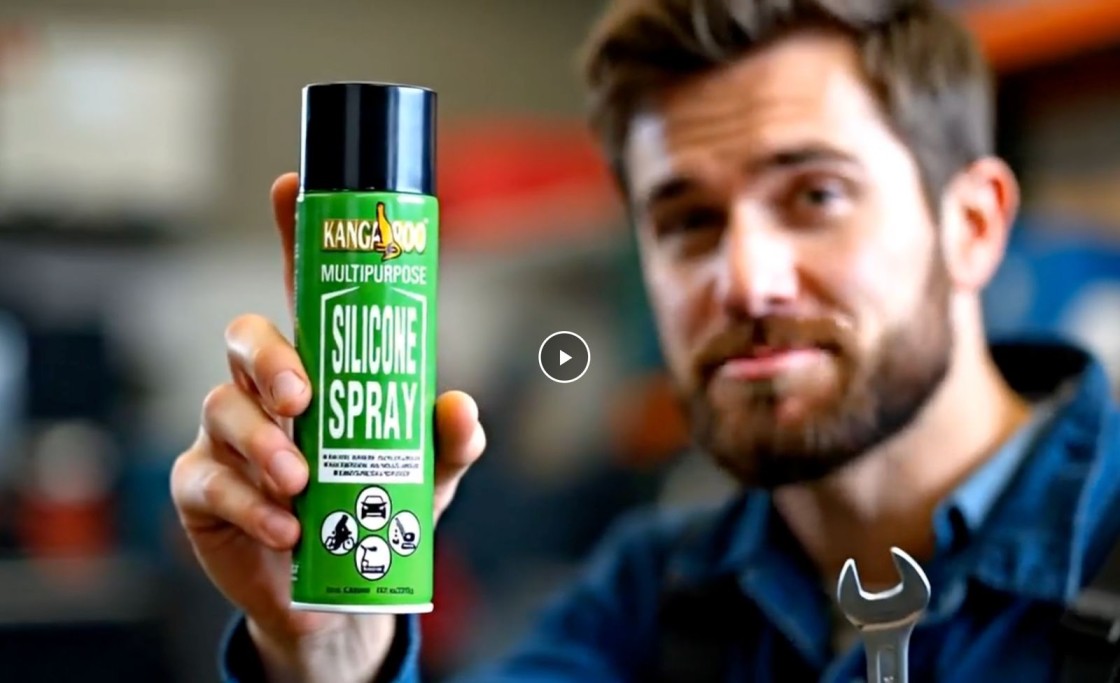
This powerful spray works effectively on car dashboards, rubber seals, bike chains, door locks, windows, industrial machinery, conveyor belts, and sewing machines, delivering smooth operation and rust prevention. Its high-temperature and high-pressure resistance make it suitable for heavy-duty use, while its anti-friction properties extend the life of moving parts.
Conclusion
Although both silicone lubricant spray and ordinary lubricants are used in reducing the friction, silicone sprays have better performance and advantages that make them a better option in most daily and industrial use. Their non-toxicity, ability to prevent rust, their odourless structure, and their ability to resist high temperature provide an outstanding advantage. To provide a seamless operation of nuts, bolts, sliding tracks, linkages, valves, etc., silicone lubricant spray will be an efficient, modern, and reliable one.
One can opt Kangaroo Multipurpose Silicone Spray that gives 2X protection against wear, rust, and friction which makes it an essential maintenance companion for home, automotive, and industrial needs.