Understanding the Basics of Wax, Polishing Compound & Rubbing Compound for Cars
All owners of cars aspire to have that showroom shine many years. Nevertheless, sunlight, dust and pollution tend to dull the paint and leave little flaws on the surface. Three important products are significant in the car detailing to restore the lost luster, which are the rubbing compound, polishing compound and wax. They all play a special role and knowing of their differences can make you maintain your car in the brand new look.
Rubbing Compound: The Heavy-Duty Paint Restorer
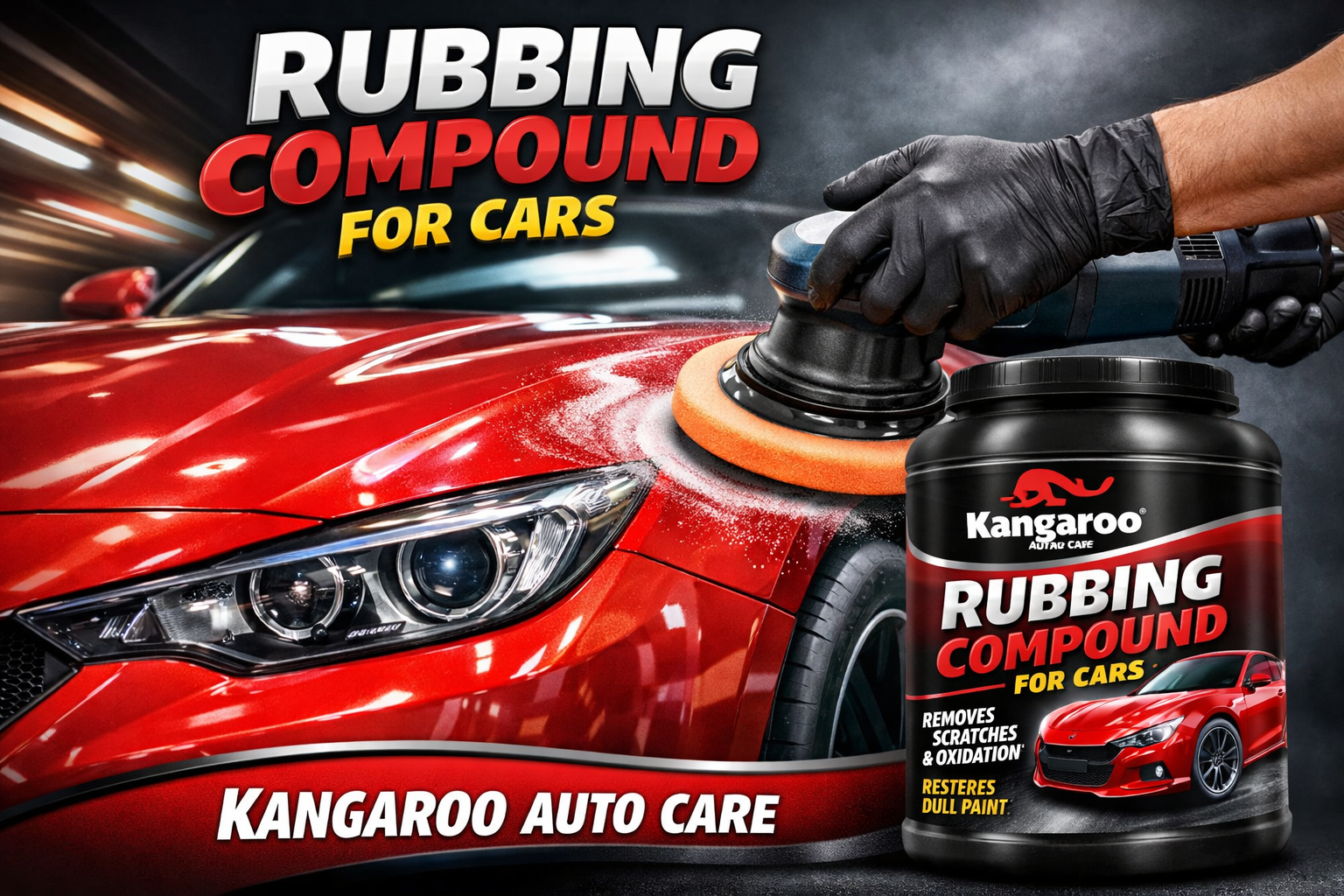
The very first step in paint correction is a rubbing compound on a car. It is a rough substance that is used to eliminate oxidation, deep scratches and hard swirls on the surface of the car. Imagine, it is a fine sandpaper that is in the liquid state. When used properly it abrades an extremely thin coating of paint or clear paint making the surface smooth and getting rid of flaws.
How It Works:
Rubbing compound involves rubbing of rough paint with abrasive particles. The process of peeling off the damaged layers gently without damaging the fresh paint restores the glossiness and regularity of the paint on a car. It particularly comes in handy in vehicles that have a scratched or tarnished exterior.
When to Use:
- After years of oxidation or sun damage.
- When there are visible scratches or dull patches.
- Before applying polishing compound or wax for best results.
However, because it’s a powerful product, it should be used carefully. Overuse can thin the clear coat and damage the paint if not handled properly.
Polishing Compound: The Smooth Finisher
After the rubbing compound has been used, it is poly time. This product contains smaller abrasives that polish the surface leaving no haziness by the rubbing compound. It aids in making the paint glossy and deep and therefore reflective, making your car looks glossy and mirror-like.
How It Works:
Polishing compound eliminates minute flaws forming a clear and reflective surface. It contributes to the shine of the painting by enhancing clarity and depth, to make the color appear richer and more vibrant.
When to Use:
- After using a rubbing compound to refine the surface.
- As part of regular detailing to maintain shine and gloss.
Using a good quality polishing compound ensures a perfect foundation for waxing, as it helps the wax bond better with the paint surface.
Wax: The Protective Shield
Once the paint is restored and polished, the last step would be protection that is when the role of the wax comes in wherein it would help provide protection between the paint on your vehicle and elements such as UV rays, rain, dirt and road salt. It also improves the shine and gives it a glossy finish, which will last a few weeks or even months.
How It Works:
The paint is coated with wax to create a thin protective coating seal on the smoothness that is created by polishing. It keeps away water, oxidation and enhances convenient cleaning in the future. Most of the modern waxes have carnauba or artificial polymers which provide long lasting protection and lustre.
When to Use:
- After polishing, as the final step of detailing.
- Every few months to maintain paint protection and shine.
Conclusion
To be able to take good care of the car, it is necessary to know the functions of such compounds as rubbing compound, polishing compound, and wax. The rubbing compound makes the surface, the polishing compound makes it perfect and the wax covers it. When applied simultaneously in the correct sequence, they will restore the paint work on your car, making it smooth, glossy and tough, just as it was the first day it left the showroom. These three fundamentals are the only things that can be taken to guarantee you not only have a beautiful looking car but a car that is well-maintained and can go long distances.